Introduction #
For online retailers, achieving viral success during a holiday rush or flash sale is the ultimate goal. However, for storefronts built on Adobe Commerce (formerly Magento), a sudden surge in traffic often exposes critical weaknesses in the underlying software architecture. Without a resilient foundation, a spike in demand can overwhelm system resources, transforming a potentially profitable event into a technical crisis that damages both revenue and brand reputation.
Operating on a basic, single-server environment creates a definitive bottleneck during high-traffic events, much like a physical store relying on a single cashier to serve thousands of shoppers. This monolithic configuration severely degrades store performance, frustrating potential buyers and resulting in significant lost sales during peak operational windows.
To mitigate this risk, enterprises must evolve beyond standard configurations. The industry standard for e-commerce scaling is the implementation of a split-tier architecture. A critical step in legacy modernization, this approach decouples the workload across specialized servers. By distributing tasks—rather than forcing a single server to manage all processes—your Adobe Commerce platform remains fast, stable, and reliable under heavy load.
Is your current infrastructure engineered to handle your next major sales event? Adopting a scalable architecture is not merely a technical upgrade; it is a strategic business necessity. By modernizing your operational framework, you protect your brand equity and ensure consistent revenue generation, regardless of traffic volume.
Understanding the Monolithic Bottleneck #

Many e-commerce platforms initially rely on a "monolithic" software architecture. In this configuration, every critical component—including the web server, application logic (PHP), and database—resides on a single physical or virtual machine. Analogous to a restaurant where one employee functions as host, chef, and waiter, this setup operates adequately during quiet periods but inevitably collapses under the pressure of high demand.
When traffic surges, this single-server model faces an insurmountable bottleneck. The web server struggles to manage incoming connections, and the application layer exhausts the worker processes needed to handle transactions. Crucially, the database—the engine of your Adobe Commerce store—is forced to compete for the same finite CPU and RAM resources. This internal resource contention is a primary driver of poor Adobe Commerce performance, causing system latency to skyrocket.
The outcome is a compromised user experience, characterized by slow page loads or 504 Gateway Timeout errors at checkout. Adobe explicitly advises against single-node setups for production environments, as they introduce severe scalability issues and a distinct single point of failure. If operational reliability is a priority, legacy modernization is not optional—it is essential to prevent revenue loss on an infrastructure that is architecturally destined to fail under pressure.
The Solution: A Split-Tier Architecture #
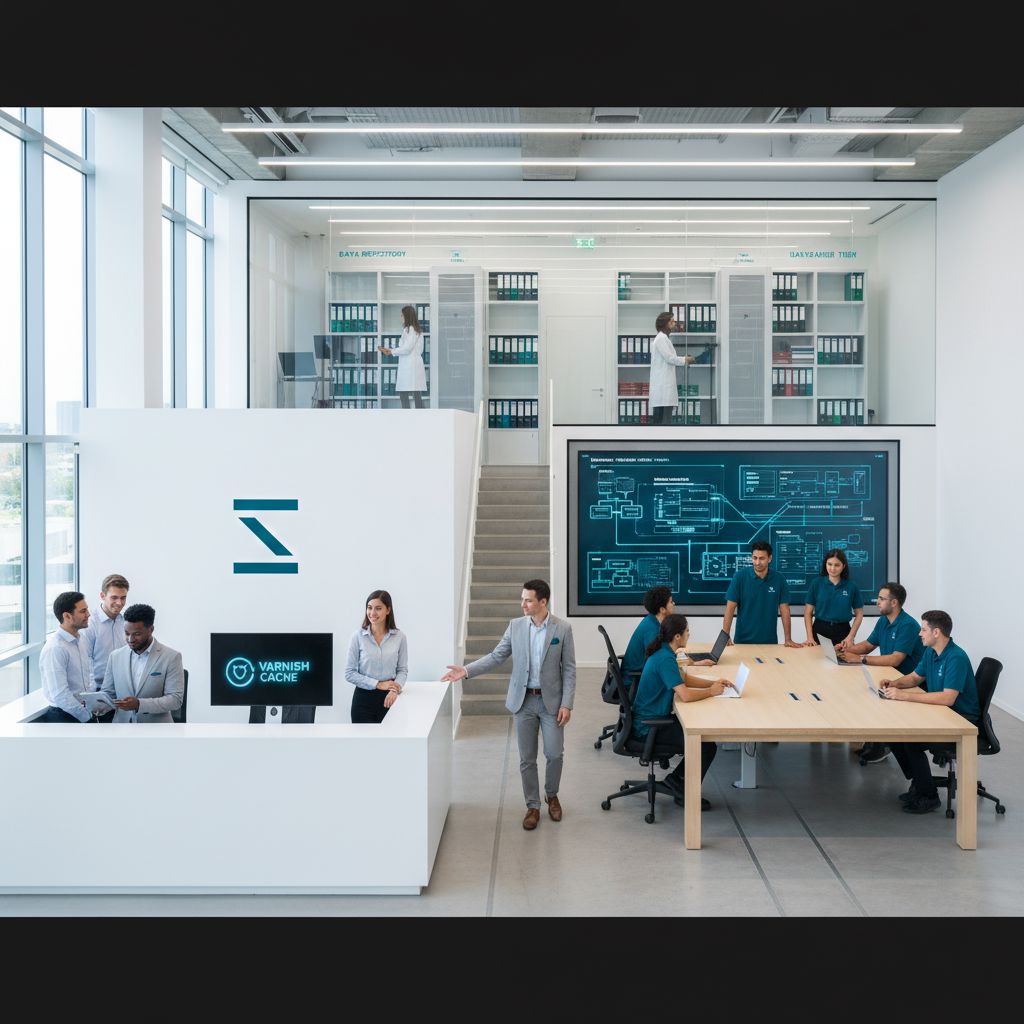
The definitive solution to the monolithic bottleneck is a split-tier architecture. While a monolithic setup functions like a one-person shop, a split-tier model operates like a fully staffed enterprise organization. In this optimized software architecture, the critical components of your Adobe Commerce platform are decoupled and hosted on distinct servers, each tuned for a specific function.
This scalable architecture segments your infrastructure into three distinct layers, efficiently orchestrated by a load balancer:
- The Web Tier: Acting as the public interface, this tier manages incoming HTTP requests and delivers static content. Crucially, it utilizes Varnish Cache, a high-performance HTTP accelerator. A well-configured Varnish implementation can satisfy up to 90% of visitor traffic directly from memory, significantly enhancing Adobe Commerce performance by shielding backend systems from excessive load.
- The Application Tier: Situated securely behind the web tier, this layer functions as the processing engine. It dedicates resources exclusively to executing core Adobe Commerce logic, such as complex calculations for shipping, discount application, and checkout workflows.
- The Database Tier: This tier serves as the central repository, strictly dedicated to storing and retrieving critical data like product catalogs and order history. By isolating the database on optimized infrastructure, you prevent high-volume front-end traffic from interfering with essential backend I/O operations.
The strategic advantage of this decoupled software architecture lies in targeted scaling. Unlike monolithic setups that require expensive upgrades to the entire machine (vertical scaling) to address isolated bottlenecks, a split-tier model allows for precision. If a marketing campaign triggers a traffic surge, you can rapidly scale the Web Tier horizontally without unnecessary expenditure on database resources.
This flexibility optimizes both performance and cost efficiency by allocating computing power exactly where it is needed. By eliminating resource contention between application and database layers, you establish a stable, resilient e-commerce platform engineered for sustained growth.
Key Benefits of a Scalable Architecture #

Adopting a scalable software architecture fundamentally transforms infrastructure cost management. Instead of relying on costly "vertical scaling"—which necessitates upgrading to massive single-server instances—businesses gain the agility of horizontal scaling. During peak demand, you can dynamically deploy cost-effective resources to specific tiers, a primary advantage of modern cloud infrastructure. This targeted approach ensures operational efficiency, allowing you to pay only for the capacity required to support growth.
For any e-commerce platform, operational continuity is non-negotiable. A monolithic setup presents a critical "single point of failure," where one error can trigger a total system outage. In contrast, a decoupled software architecture ensures high availability through built-in fault tolerance. Should an individual application node fail, traffic is seamlessly rerouted to healthy instances. This resilience minimizes downtime, safeguarding revenue streams during high-stakes sales events.
Superior e-commerce performance directly correlates with revenue generation. By eliminating resource contention between web, application, and database tiers, each component operates at peak efficiency. This optimization delivers rapid page loads and a friction-free checkout experience. Because latency is a primary driver of cart abandonment, this scalable architecture is instrumental in maximizing conversion rates and customer satisfaction.
Finally, a split-tier software architecture dramatically strengthens your security posture. Decoupling allows for the isolation of the database tier within a private network, strictly shielded from the public internet. Access is rigorously controlled, permitting only authenticated application servers to communicate with sensitive data. This layered defense strategy is a cornerstone of secure architecture, effectively reducing the attack surface and protecting your most valuable business assets.
Conclusion #
Migrating from a single-server environment to a split-tier software architecture represents the definitive solution for scaling Adobe Commerce effectively. Reliance on traditional monolithic setups creates inevitable bottlenecks that degrade Adobe Commerce performance and compromise stability during critical operational windows. By decoupling your web, application, and database layers into a scalable architecture, you eliminate resource contention, ensuring your e-commerce platform remains responsive, secure, and robust under any traffic load.
This architectural shift delivers the strategic advantage of horizontal scaling, enabling precise resource allocation that optimizes costs while guaranteeing high availability. Ultimately, this process of legacy modernization is a direct investment in your customer experience, establishing a resilient foundation that empowers sustainable business growth rather than limiting it.
References #
html
Reference
- Title: Performance best practices | Adobe Commerce, Author(s): Adobe, Publication: Adobe Experience League, Link: https://experienceleague.adobe.com/docs/commerce-operations/performance-best-practices/introduction.html
- Title: Using Varnish with Magento, Author(s): Atwix Team, Publication: Atwix Blog, Link: https://www.atwix.com/magento/varnish-with-magento/
- Title: Recommended high-level architecture for Magento 2, Author(s): Web-scality Team, Publication: Web-scality Blog, Link: https://www.web-scality.com/blog/recommended-high-level-architecture-for-magento-2
- Title: Install and configure Elasticsearch, Author(s): Adobe, Publication: Adobe Commerce Developer Documentation, Link: https://developer.adobe.com/commerce/webapi/rest/quick-reference/search-engine/elasticsearch/
- Title: Magento 2 Architecture Explained: How to Build a Scalable eCommerce Store, Author(s): SimiCart Team, Publication: SimiCart Blog, Link: https://www.simicart.com/blog/magento-2-architecture/