Introduction #
The Legacy Crisis and the AI Paradigm Shift
Imagine attempting to operate a modern, high-speed logistics network on infrastructure built before the cloud era. For many global organizations, this is the daily reality of their Enterprise Software Engineering landscape. Approximately 70% of the software powering the Fortune 500 was developed over two decades ago. These legacy systems—often critical workhorses written in COBOL or early Java—have calcified from assets into liabilities, accumulating technical debt and preventing the implementation of a truly scalable architecture.
Treat technical debt exactly like high-interest financial leverage. Every time a team opts for a "quick fix" over a sustainable solution, they borrow against the future. Today, the interest on that debt is due. Industry metrics indicate that maintaining these aging monoliths can consume up to 80% of an IT budget, stifling innovation and critical business automation. While legacy organizations service interest on code written in the 1990s, nimble, cloud-native competitors are seizing market share.
Historically, Legacy Modernization presented a binary, high-risk choice: a complete "rip-and-replace" or an inefficient "lift-and-shift" to the cloud. Generative AI has dismantled this dichotomy, introducing a superior third path. AI fundamentally alters the economics of software architecture by enabling automated, incremental modernization. It does not merely move code; it understands and refactors it for a cloud-native environment. By leveraging AI, organizations can accelerate modernization timelines by 40–50%, transforming a multi-year struggle into a manageable evolution.
At OneCubeTechnologies, we view modernization not as an IT ticket, but as an imperative for business continuity. The following report details three strategic approaches to unlocking the value trapped within your legacy systems.
OneCube Executive Tip: Do not wait for a system failure to audit your infrastructure. Evaluate your "Bus Factor." If the business logic for a core function resides solely in the mind of a single developer—a scenario our senior .NET Architects frequently resolve—your operational risk is already critical. Start small; modernization is an iterative journey, not a cliff dive.
Automated Discovery and Knowledge Reclamation #

Strategy I: Automated Discovery and Knowledge Reclamation
The most formidable barrier to Legacy Modernization is not the complexity of the code, but the opacity surrounding it. Over decades, documentation erodes, "tribal knowledge" retires, and patch management creates a convoluted web of logic. This results in the "Black Box" dilemma: IT teams understand system inputs and outputs, but the internal processing remains a mystery. Attempting to migrate such systems to a modern cloud architecture without understanding internal dependencies is akin to structural renovation without blueprints—risking catastrophic failure.
Research identifies this information asymmetry as a primary cause of modernization failure. Traditional reverse engineering is notoriously labor-intensive, requiring analysts to manually trace execution paths line-by-line. This manual discovery creates a massive bottleneck in Enterprise Software Engineering, often requiring months to map a single module.
Solving Knowledge Erosion with GenAI
Generative AI (GenAI) addresses this challenge through "Knowledge Reclamation." Unlike legacy static analysis tools, Large Language Models (LLMs) possess semantic understanding. They do not merely parse code; they interpret the intent behind it.
Consider legacy code a manuscript in a dormant language. A traditional tool verifies the grammar; an AI agent acts as a translator, reading a block of COBOL and explaining, "This section calculates compound interest for tier-2 savings accounts using 1998 tax rules." This shift from syntax to semantics is critical for engineering a truly scalable architecture.
AI-driven discovery targets three high-value areas:
- Semantic Documentation: AI tools ingest millions of lines of legacy code to automatically generate human-readable documentation, flowcharts, and functional specifications, drastically reducing the onboarding curve for new engineering talent.
- Business Logic Extraction: The highest value lies in separating core business rules from obsolete syntax. AI agents identify critical logic (e.g., pricing algorithms) that must be preserved for business automation, allowing organizations to discard the technical debt surrounding it.
- Dependency Mapping: AI visualizes the invisible web of connections between modules, databases, and interfaces. This ensures that when components move to a cloud-native environment, architects can predict and mitigate integration risks.
Case Evidence: From Binary to Blueprint
Industry leaders are already validating this methodology. In a "Black Box to Blueprint" initiative, Thoughtworks utilized AI to analyze a legacy system where only binaries and database schemas remained. The AI reconstructed a functional specification by analyzing behavior and data interactions, allowing domain experts to validate functionality without manual deciphering.
Similarly, BCG deployed GenAI agents capable of "interrogating" legacy codebases. Instead of reading thousands of lines, engineers queried the AI regarding specific implementations, such as customer loyalty discounts. The agents utilized code dependency graphs to provide precise answers in seconds—tasks that traditionally consumed days of engineering time.
OneCube Executive Tip: Mandate a "Knowledge Audit" before writing a single line of new code. Utilize AI discovery tools to index your codebase. If your team—including a senior .NET Architect—cannot confidently explain the business logic behind a core module within 15 minutes, that module is a critical target for AI-assisted documentation. You cannot successfully execute Legacy Modernization on a system you do not understand.
AI-Accelerated Refactoring and Translation #
Strategy II: AI-Accelerated Refactoring and Translation
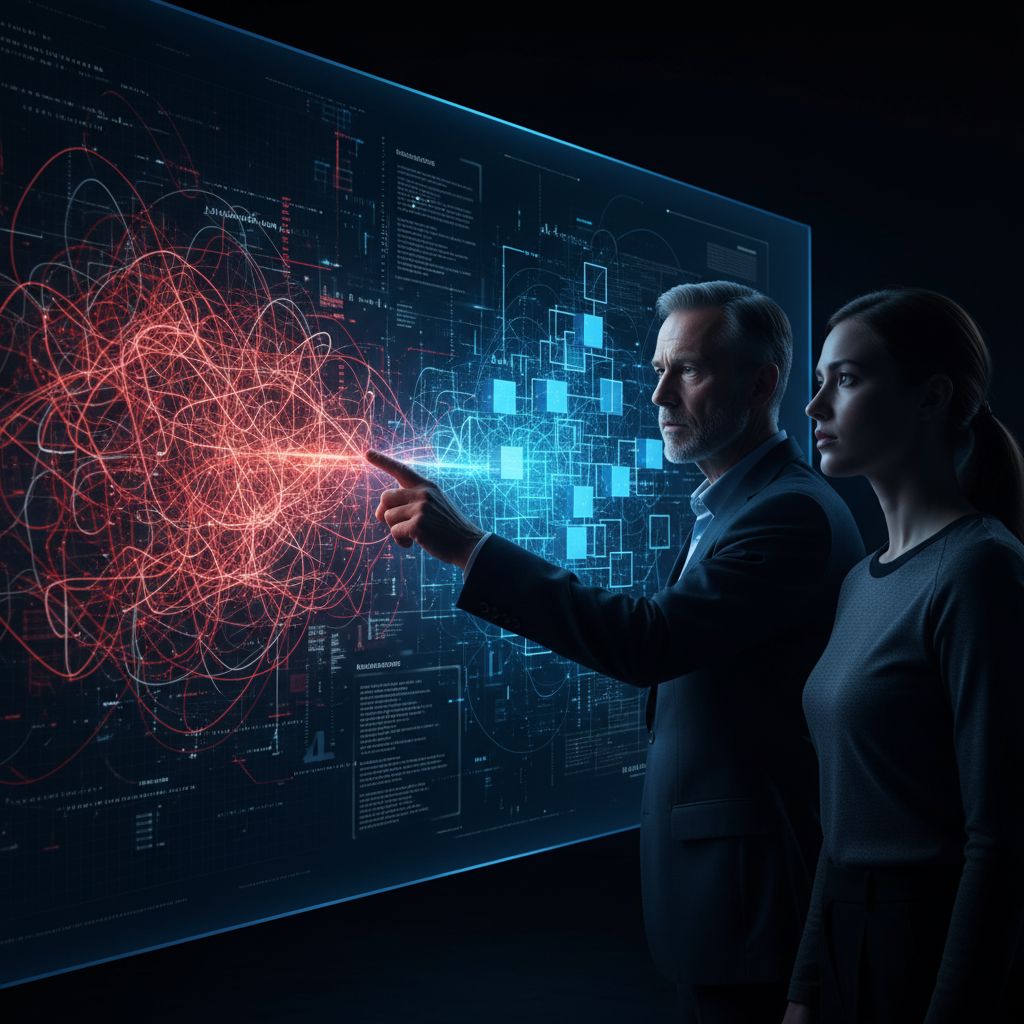
After reclaiming system knowledge, the focus shifts to transformation. Historically, Legacy Modernization relied on manual rewrites—a slow, expensive, and error-prone process. The industry is moving beyond this artisanal approach toward automated efficiency.
The second strategic imperative leverages AI to automate the conversion of legacy code—such as COBOL or older Java—into modern languages like Python or C#. This transcends simple "transpilation." Modern AI tools, guided by senior engineering leadership like a .NET Architect, engage in intelligent refactoring. They do not merely translate syntax; they restructure the underlying logic to support a truly scalable architecture.
From Procedural Monoliths to Modular Agility
Legacy systems are typically built on procedural code—long, linear scripts that are rigid and difficult to maintain. Modern Enterprise Software Engineering demands Object-Oriented Programming (OOP) and microservices, which organize code into reusable, modular components. A basic translation tool converts messy COBOL into messy Java, preserving the "spaghetti code" structure.
In contrast, AI models are context-aware. They analyze the broader application to identify logical patterns. An AI agent can recognize redundant code blocks, extracting and converting them into clean, reusable classes or microservices. This capability is the differentiator between simply hosting legacy code on a server and becoming truly cloud-native.
Eliminating Technical Debt and "Code Smells"
Refactoring presents a critical opportunity to liquidate technical debt. Legacy codebases often contain "code smells"—inefficient patterns signaling deeper structural issues.
- Automated Optimization: AI agents identify inefficient legacy algorithms and replace them with optimized modern libraries, delivering immediate performance gains crucial for business automation.
- Security by Design: During translation, AI tools scan for vulnerabilities, ensuring the new code is hardened against contemporary threats—a non-negotiable requirement for robust cloud architecture.
The velocity gains are significant. Research indicates GenAI accelerates code conversion and refactoring by 40–50%. In a notable financial sector case study, a modernization initiative estimated at 800 hours achieved a 40% time reduction through GenAI augmentation.
The Safety Net: Automated Test Generation
The primary risk in modernization is regression—breaking critical business functions. Ensuring new Java or C# code behaves identically to the original COBOL is paramount.
AI addresses this by generating automated test cases. Before code transformation begins, AI tools analyze the legacy system to create a suite of tests defining the "ground truth" of system behavior. These tests validate the new code, providing mathematical certainty of functional equivalence and significantly de-risking the Legacy Modernization effort.
OneCube Executive Tip: Reject the "Big Bang" migration strategy. Pilot AI refactoring on a single, low-risk module to establish a baseline for "functional equivalence." Verify that the new code replicates the legacy output with absolute precision. Once your AI pipeline guarantees this fidelity, scale the operation to mission-critical systems.
Intelligent Re-architecture and Decomposition #

Strategy III: Intelligent Re-architecture and Decomposition
Translating code from COBOL to Java modernizes the syntax, but if the underlying structure remains monolithic, the fundamental constraints persist. The final stage of Legacy Modernization focuses on transforming the software's topology. We utilize AI to decompose rigid monoliths into agile, cloud-native microservices, establishing a truly scalable architecture.
While Strategy II updates the materials (language), Strategy III redesigns the blueprint.
Decomposing the Monolith with the "Strangler Fig" Pattern
The "Strangler Fig" pattern is the gold standard for this transformation—gradually replacing specific functionalities of the legacy system with new microservices until the obsolete core is retired. Historically, this required senior architects to manually disentangle years of dependencies to identify safe extraction points.
AI accelerates this process by identifying "seams" within the monolith. Advanced tools visualize complex dependencies, pinpointing areas of "high cohesion" (logic that belongs together) and "low coupling" (logic that is loosely connected).
- Intelligent Extraction: Industry analysis indicates that GenAI-powered refactoring can correctly identify up to 65% of monolithic code segments suitable for microservice decomposition.
- API Generation: Once AI isolates a module for extraction (e.g., a "Billing Service"), it automatically generates the necessary API wrappers. These APIs serve as bridges, ensuring seamless communication between the remaining legacy system and the new modern service during the migration.
Automating the Cloud-Native Transition
A robust cloud architecture demands more than remote hosting; it requires "Infrastructure as Code" (IaC)—scripts that automatically provision servers, databases, and networks. Writing these configurations for platforms like Kubernetes is complex but essential for modern Enterprise Software Engineering.
AI agents serve as force multipliers in this domain, generating the IaC templates required to deploy new microservices instantly. Research demonstrates that GenAI can reduce manual inputs for cloud infrastructure templates by 15%, significantly accelerating the migration of application estates. This advancement propels organizations toward "Autonomous Intelligence," where AI agents orchestrate the planning, extraction, and deployment of services, allowing engineering teams to focus on high-value strategy.
OneCube Executive Tip: Do not decompose indiscriminately. Leverage AI to analyze the "rate of change" within your modules. If your "Pricing" module requires weekly updates while your "General Ledger" is stable for years, prioritize the high-velocity module for extraction. AI analysis of commit logs will pinpoint exactly which components of your monolith are creating the greatest friction.
Conclusion #
Conclusion
AI-powered Legacy Modernization represents a paradigm shift in Enterprise Software Engineering, transforming an initiative historically defined by prohibitive cost and risk into a manageable, incremental evolution. By executing the three strategies outlined—Automated Discovery to reclaim intellectual property, AI-Accelerated Refactoring to sanitize code, and Intelligent Re-architecture to establish a cloud architecture—organizations can finally convert technical debt into strategic capital.
The industry data is unequivocal: enterprises leveraging these AI methodologies are accelerating modernization timelines by 40–50% compared to traditional approaches. However, sustainable success demands a symbiotic strategy, merging the computational velocity of AI with the strategic governance of senior engineering leadership. As Agentic AI matures, the dichotomy between "maintenance" and "innovation" will dissolve, enabling continuous, real-time system evolution. At OneCubeTechnologies, we believe the future belongs to those who view their legacy infrastructure not as an anchor, but as the bedrock for their next digital breakthrough.
References #
html
Reference
- TechTarget. (2025). Integrate and modernize legacy systems with AI. https://vertexaisearch.cloud.google.com/grounding-api-redirect/AUZIYQFtlr2O8-T3UxwOALfvRbcYWhsOaCIbhej31dSQsSGWikbl_e7OdYwKzMJ-muCMldwnSTEhtumMhH_EED15g1uCwU0lS9VRz7m4BOBXW7Wyt87rELP4Wenc082NK83Pb0bVxffJlZPjBuJBMf9aCyZsY_53WTuIpSJEHjvEe9Xis5RAK-XSYLtPoKFXWXRU5KMnOC3CV48=
- MindInventory. (2025). AI in Legacy System Modernization. https://vertexaisearch.cloud.google.com/grounding-api-redirect/AUZIYQHfriTWBo17SHDTjtAbvqcZ_hRtkF0rT_ar4eojd5zph0u0tuHYyKXmCxR0TqRcnH7kT6zO5X8QwZrc60R0QDlWpQyHUEcAc41-ILNUPHhSR1s-fLjx4iAuJd7pmoFOpWVZLYf0nfuiOY1Q7QFeoxK643AxfxjeNl3cEMc=
- McKinsey. (2024). AI for IT modernization: Faster, cheaper, and better. https://vertexaisearch.cloud.google.com/grounding-api-redirect/AUZIYQHgGgWXdSO5xIfBPMKX8HUz_nfAwlp8dwJf_X4kNHvbUoBr_LBMfzq2KwfBc3JLdp1tRhmk44O_DAT7pINIwBvqifBVvkh04aiuK53NC0v0_l-h-hFj8vdzPGYaiplun55WuekJKelF6-YAtVe8uT0aN6yZ3Uj6g00aiFIYYOXKx-4FJcsAXBlKcdnHKXdGBsTy24lhLbb5C7yZhdvhmB-MEvMPXtbbGQ==
- FullStack Labs. (2025). How AI is Transforming Legacy Modernization. https://vertexaisearch.cloud.google.com/grounding-api-redirect/AUZIYQGoyu-oJN-QoLCcTjaNJbB3MIbpF-BJ9GzwX_VrCKdWXJVCUj29g-5SigXJSHda3pfTcj5VLOUUDpdjI7nAwPFtgECgyZXJG1Xf1yyL6ITm4VB0jKdDlacXih_8ooIHqXpz4cGTSnR_l1LdBxpzKS5-AKcgbOvjL8YAHO47tpgp54HJsEa5wxcuIwdZgY9jpA==
- Dualboot Partners. (n.d.). 5 Strategies to Modernize Legacy Systems. https://vertexaisearch.cloud.google.com/grounding-api-redirect/AUZIYQGfLAiB5MYrYF8OTc-bXNqlMXwy6YYuWavLd-h4JRyaCJsCOz84Hmm7S5LnDV7qST4GachqVYxtOHEfgIZQFqBc6D3naPwnS5Rs-DtiJ0wFZXbl5g9Gs0W4FYnm9LipdpIbLYUOeiCFjNVhsVK3bGYlYjKOItRLTRKLUapD1fuQJDcpeGgH
- Medium. (2025). The Unreasonable Effectiveness of Generative AI in Legacy Application Modernization. https://vertexaisearch.cloud.google.com/grounding-api-redirect/AUZIYQHn8kI08IDVWzpQaESCRZunGj3w2Xa2PgHZS4pxUi40u-pZUyiuxSYftVDiemRlLDaU0RvFe_pBs0X0JQd5zNkqcY7aFARdc8NObuenkxpZs6V0wdjdbY8S0sZhxFSpoG0MWxJCtD4kyjYpaezK6XizKomOXzpc3DWfI9BtXfp-dQdBtmIvhR5jxPIxqAiYDiXizYHsJHLVGR8DT6oZYrzG64LlDdVJNMR8ZsHjzbBjz9dqhl5iAuI=
- Coderio. (2025). Modernizing Legacy Systems AI Guide. https://vertexaisearch.cloud.google.com/grounding-api-redirect/AUZIYQGknUJbHa8zyjaIYaZVzM6wUj-yb-Zu7TniR95gyxBPT64bS5tqV_HkueRD7DGCksDVKxi1Nu01n5hwHgdU5YKtBsTbKe_1xRtWReV5dllZfZt695hF-3lyIMoHqcg4Tgcsb5Qznb8DAYZxnyrIpOqzlnLZtWMl-RsVAEsERHa66Fr4
- BCG. (2025). How Gen AI Rewriting Legacy Tech Modernization Rules. https://vertexaisearch.cloud.google.com/grounding-api-redirect/AUZIYQGKC8XtnmcldlVSkLOLHzd8aRlQgvq7qIVv0Ixptt_rFIDYyP4gybKYZKiCjZLbPvgoKqA5amDu61v3NU4ri4v6jzf-QX9br7bMrJSdpkf96-hDnAOBl3ZWO9DXwujNiGD_0r-Tg6mdTO8wf_pktegcZArVz-qmTSOF-xgD07prTxTEDZoFwyZVkMn4wx9Oeg==
- InfoQ. (2025). Thoughtworks Legacy Modernization GenAI. https://vertexaisearch.cloud.google.com/grounding-api-redirect/AUZIYQHLsTeysKtlX0lTQA-EQfNfrIhVcVUIJDJRiRbkjd_tVrlYTRxG0o02u4cbnZ-pSbwOjBuoPX8XBzTZIUmWRnNOwDoBPtBcsQ-Q0TgoqPB5g7Bb3-FfxE56ZSqV7VvILVh_o1Sq-A==
- To The New. (2025). Legacy System Modernization Generative AI. https://vertexaisearch.cloud.google.com/grounding-api-redirect/AUZIYQEG0qekSW362QeUcUaJPjkyW0uIc0d_duEL2cYcizujC35-_5hIWB-rZmRh77HyhSBwcAk_hX9K5X9gX7aYSu53nza20UzVPDVRuzbf70-hxy4AwtXuFKRsT1DIc-ybx7Rr3jmPkCR9NQhpFC69E_jFsusCrLnEkmuQcGlbaBq_H1SGQnkPuURb2A==
- Harbinger Group. (2025). How Legacy Apps Modernization Reduces Technical Debt. https://vertexaisearch.cloud.google.com/grounding-api-redirect/AUZIYQFlkAyfSc5rQzvUW5Vhfbvm1ITgYvskU8qUt4wDlvT1Fu1sDqfxv0s8gq6RCMEuAoIWy0nWfGhubeWYgaZGpEcROuL28PoICV_k9TzM_nKTiDxWHfhktq--XisCcx1yC6i1H1uumGkmtJ-aZGg1NGqlznFP_0N6AJUywXYUbCUZnUO0oZ1OZhKdA5Aiy3mHIz0=
- KodeSage. (2025). AI Documentation Tools for Legacy Code. https://vertexaisearch.cloud.google.com/grounding-api-redirect/AUZIYQH7EMu6Xp1uNGcF5G4bNxWcySXpf9mkijy-cN5zo2gy8AnDBhvYK34cxgT3G9AEHOvfkF71j-XT29aSFu_S66G6VYOQOzsOoiXPHi1YY0rRQFWtAF1oEyDmS6y4UV3eHGH9YYgJdx2YMaLF9gAiWJKcIVIM6js=
- AI Business. (2024). AI-Driven Approaches to Legacy System Modernization. https://vertexaisearch.cloud.google.com/grounding-api-redirect/AUZIYQFfgBXLgAeq1qJy_fFF5SyP4j2oAWpIU4c-cMooPnx9jloqPYLtLHHo_gxIbK5rcszuQWTDNkb99njZFVx3vx7nScgOMqpOE9zAFoVeuTftoAEwtGe0d8EjiPTNsL-s5jCobGqz0yxJFc_Mcp36e1A3cVZ7wZJxO1YGy7E1vUG8NMZyKetv0gnrgVtn
- Channel Futures. (2023). IBM Watsonx Modernizes Mainframes with Generative AI. https://vertexaisearch.cloud.google.com/grounding-api-redirect/AUZIYQGpym4mQpS5vti7U9UOh5GeO9u1KXLxFZx3ye_PJ8O7L69mE0uiPJYGga1C4YswHd36hfp6mR9IWtFb76WOHaY7bAXGOtYNfBLhOY7dTRo3pAkYbFnq0VbspL7kHT21iSt4po7vdHe-rWXaB3rL1CpakXrhslsG0NlZqEMbrAUml0AFqtQIpsZRikgmy6m6TeMzt99sPzzFP_nL54CZaQD00w==
- IBM. (n.d.). watsonx Code Assistant for Z. https://vertexaisearch.cloud.google.com/grounding-api-redirect/AUZIYQFyXqQ548ZFzQjyaeZY4uIAtjBGGPFBz2V4xFQkTia7bQ2PuOzNMKwAZn-zaAY-AbWf8bmow7ekJ-ZtZeIHihRAJX-_xGMa0hyRvWuDocLqMRgxQaynkA4ebS6cHg_6SIIfHkJB79vy2JOknA==
- YouTube. (2024). IBM watsonx Code Assistant for Z Demo. https://vertexaisearch.cloud.google.com/grounding-api-redirect/AUZIYQFIeo7mF1kyEmHGbPcfxiXw6-dkWfehg-OEBazp0AcbO5G6ot9MLuZzJ4x9IlyRbqyQFNazwf8ZjvOQYzIlZ7QMByfCQrpboS6BHmrcoEle1DyyfClPadWjJe3EGIVURXCk
- Medium. (2025). AI-Driven Mainframe Transformation. https://vertexaisearch.cloud.google.com/grounding-api-redirect/AUZIYQEPTKdPePvMi3lYzlpLyoHufTP8OwhyZmU4GegUfww7TWdzdEW3v_w5l0wsvkpkmOra5ykPoKKTJ5a9tkeWmTvMRrLDUnKxgBArpgV3UZxVkSCWXTqCObHX1II9bvPoniUhZYX9DpmtZDa09N298Jdl7ueaBgz3yAZ5gQ7sPdLoLRas9uuM-7ZfOtBzAbVH8QC_j8XRl2SXp1bOEUdxYSaxnfDuJwqfNyvR4pel
- Zencoder. (2025). Addressing Legacy System Challenges with AI-Driven Refactoring. https://vertexaisearch.cloud.google.com/grounding-api-redirect/AUZIYQFA3U62EeyybqbB4QvbH_6Y13laXcDEsXAxuwXkK8iV42sWf_Ra4ScmgaaHHmdIJwzDRfT3etljMk5TTMGUmTBQvJrpw_V65Evz-z7yCp94qxsORM51n6SFkkfzOOLZAFgqBIAExCjB6AojZQK0k_NiipXRgHiIS0aUv9cmSaK-7h29E9eX3nMkQhaAGQc=
- Bacha Software. (2025). AI-Powered Modernization for Legacy Systems. https://vertexaisearch.cloud.google.com/grounding-api-redirect/AUZIYQENeSK_hhSkv4PKq6EkK60kWX-Cwq5Mt4U4aQ1R6Hf6atDZ0iwnYfK-NnOdbKFMlbRwNiC99kmUiWj2Bx1d7bQo5pUQcKfhr0JpHG6MzSGDSM7YS8TlZVtNZPi39zdBb8rjKUM1Lf76KcgZVEOLjmCmPZviPOz4tNLUz9a9_zWpCBKy1bgTx1SR6tNr7I6C56yAjTxpMuFsYRifSl2wmYACEWQ=
- Verulean. (2025). Scaling AI Features in Legacy Codebases. https://vertexaisearch.cloud.google.com/grounding-api-redirect/AUZIYQH0xE4ASU1ageaxYSk-K3kqUj60ZKw6qGcExKgD9aoWZUF_UY-wf6Qe_yDKenYl6rj9tJd1-6A2tyZwBjMliqPJC8ZP-ezfR-qOdFS0s8p-4q7SXueDKNxtK99y2WdVCWH6U3nwt4Avmm4NFnKNd-CixIOxWN_cWq87CBHidIL8xcB5PyT_ORMxK2NI1OmDImw6uqU9S9NHCkqpEa-qpZT_jmF2-2z9FjgPjIlhs_u2n8EvYw==
- Softude. (2025). Modernize Legacy Systems with AI Tools Strategies. https://vertexaisearch.cloud.google.com/grounding-api-redirect/AUZIYQGwS1SsmhjBtbCWnIZAmLL0KZ_FWwCBX-QmEQWJIgOjxLwC7tQpJr0rSMDYg2sjbBM0C-gDVQ1xlCbq9oRI5AavJvng2fKrRXhtWoFtdi-_3riNnzbr1vJoXgk2dKosszVXqsbp4FGAU4aENLCpL4GdNO4fGF1EY6khpkHfnKtIWh5LomdH
- Infosys. (2025). Generative AI Accelerates Application Modernization. https://vertexaisearch.cloud.google.com/grounding-api-redirect/AUZIYQGp8rjvNOj4jbBfEWLtU64qe6HfGJfGeXeI45w4rGatmRPQB-CSuPjPK21xvofsEOtGLNhJjL4-UA3zkfSWkto2P8TvO9zgJMuQsBK9Dlg1YlEDFWs4N2MfuSxyNo6HbHmMNgXdZ2By2EoC0WsuYj3c_vaIJ_fba1fnDSOLAy--HMyAyaSQ3afPhxu8Km5MUpEPaoxOQPmp
- JCSTS. (2025). AI-Driven Legacy Modernization in Practice. https://vertexaisearch.cloud.google.com/grounding-api-redirect/AUZIYQF72k-lr9oFKkVFSL7Bw6G8iR7KL9-XNQpnr_E2e2t5a3v8wjGLbo3ZO0VEWQmGi45rBgLeADQbW6cJd5fDm2W7soMno053eNgFF35ie1aiZCQ9xB-6jkel26P6QT1gDLRwnUSEYPSEKyEUt9XdBGUC2Rp7XNXQF8m3UAPR8J94JhZds9E8
- IBM. (n.d.). Mainframe Modernization and AI. https://vertexaisearch.cloud.google.com/grounding-api-redirect/AUZIYQG-K1UdNMdGvGgS5vtZI82S4avBcixUcn2u6r4gnw7RByoqmXXYDhQqCWYYB76w_daKmyi5TCdwsMKtdTmB8UbMXyZvSu-UY_dgrmUpyWTH3v6m0Kie4bbt-FfEeaDOF6riBalHxOJz2piKxcCSEpR8KzRzEiA8lbhu
- Accenture. (n.d.). Integrated Reporting Client Stories. https://vertexaisearch.cloud.google.com/grounding-api-redirect/AUZIYQFUHXWlhQnYudrVspeVT7U0Ota8S6KaMXfB1dVv8oi56EU4TsrP-20nRifMqJHqudRJwmjqanEiozFLUNhaovcN8I1qfdPBwshvdWS9DP1bjYHr6NHrKL3Ghp3v764yXqxtVu-ANIIEegD1Ob9h4O4CbKtznuIJl6bRGUn0oqtK2b33sVcHs40=
- Infosys. (n.d.). Modernizing Legacy Platforms Case Study. https://vertexaisearch.cloud.google.com/grounding-api-redirect/AUZIYQEMwHLGbQBhWJ2jKPBO7MJvcdoBzNH-WuMzPyrDly3R62EdCNFLgQ5-rXILcaHpEwzz1XIL3G7b86EvsEXKJhlrfvt8h9To3oe2soogJfxCCu4fAPvT5L5iarIvn97E9RTEClJo21GqOr7TvD90mKZyd8yy3RqSv7QXIx8hNFBQw5MIAZS2r9bwhF66fi96jGqhWfQ=
- Reddit. (2025). Legacy code modernization using AI. https://vertexaisearch.cloud.google.com/grounding-api-redirect/AUZIYQFCFk48FXe9AFSNzw3bFZtFR3FF9KfBLJtPpt3W-QA9CI1giT8446NFw3yb3KtO9uQbW4ebd-ovPiurkUNN1yB3R6B1NBNxL48fuQfWR5jPXWkGg0NmvR8hrFg8tD5ZIr_Q0Uz5SLkMBo4McCaqLH2JvuhwFSVH2PaUUC_W6lj8OJkQrgOTuzZRge1j
- Medium. (2025). Unlocking the Future of Code Refactoring. https://vertexaisearch.cloud.google.com/grounding-api-redirect/AUZIYQEQcLSidMoZNzNuOnB5a60aTICc6djT2zg0ve3VJK8xqs0zgXbPc2YFgv-12kPAPEhfIVSohXlU9fyhTMctdlgmHxdsjc5sCr5CbrwJVlPWDxiCntbmJM1LJgmLkkNM3p5eUtdWjrl42aVUbAia78J8S_iBTyysxaoM5LkTzqrmLo25396NhqTiZLuROXL-KUPAieyIm5r5m9-4Zvuj1oX96F_Qw2UaFKAJCB0bj5cac2tgaBB_2ycHksZB_l2IGCxJ
- Accenture. (n.d.). Reinvented with Accenture. https://vertexaisearch.cloud.google.com/grounding-api-redirect/AUZIYQFz45P9HvncyUFeEPfhwENpUw6g-nTOa1G4mw-PuIrwEs8RqRtbkar1dZp5TeiPbSl5WC6iU5P1TNKfmv5BFSdjZxL2hSSQ7hRyogknrbjZ7J8A2ajddU4XSE48NWtsFzh13VlBO6FaahBs1oMxm2kKvuRS47tttSZkjNPVLV0l2bA=
- Bright SEO Tools. (2025). Top 15 AI Tools for Software Engineers. https://vertexaisearch.cloud.google.com/grounding-api-redirect/AUZIYQH7Lc43kgh9cmMJFM8Qa-xjFiqIRNVeM9TM2qOuVLGU0BqycwvU9OXSsYX49HkORWv7Eesg6Mqx0f7d3C34-Qc6then-7OQ314tNAUcQdMxWm62kffFFHav6SqPQ-KIyjvORWjf354jcd0r3RviPEVfU07c_7CM1xHDSX7_
- McKinsey. (2024). Enterprise Technology's Next Chapter. https://vertexaisearch.cloud.google.com/grounding-api-redirect/AUZIYQEqyCpVvZ4yDuxWk84EVE9oIxKOG8XQaBatiGe9IEbnU2PTgV1_ynhycV0uhEWsdhuTmrDTeYvYvv7Cu7U36zVB0I-xFBGEVIzrRCWO-w4bTd5zFdetFjjQ0HAyEWmIb-bLb6q97i-y-1lvHofrS6uuKM_T1GjjQot_3P2T-afh-UcvU0Wk65To1FqCt_CAmGB1AoUgV28yRTF4vmxoFWh5P-hFxJlByMrEuX4gEr_NNBlxw_p83S8oUacIxtIkp5Cihtl3yi1LMARsdfDRP42h5eY=
- Martin Fowler. (2024). Legacy Modernization meets GenAI. https://vertexaisearch.cloud.google.com/grounding-api-redirect/AUZIYQEel7Ru5Sa9LWkG0gibHtqQrhNij_KkZxqN4Q7gqY5ua_rrtQS-eBDZWtD7Ld2ZlUFKnYvhJgwiiR7xfXsHzAW1OdxZx942VRb83NysWlwlRQ_cXrw6PR5vfyitdrkx_jO5ZTVRxEq_JeUAy2TlMDLEzBLaV3tS3Zs=